Music Theory and Racism: Rethinking the Western Canon
Why the subject we call “music theory” is really the practice of a small slice of Europe, and what it would mean to make room for the rest of the world’s music.
The short version
- What we call “music theory” is mostly the harmonic practice of a small group of 18th- and 19th-century Europeans. It was never a universal grammar of music.
- Philip Ewell calls this the field’s “white racial frame,” and points out that some founding theorists, like Fétis and Schenker, were openly racist.
- Every culture has a rich music, and a rich theory behind it. Teaching only the European canon ranks them without ever saying so.
- Scholars still argue over the words “white supremacy.” Far fewer argue with the practical goal of decentering the canon.
- Nobody is asking you to drop Bach. The idea is to treat European music as one great tradition among many.
Ask most musicians what “music theory” is and you’ll hear about scales, chords, voice leading, and figured bass: the tools for analyzing one specific body of European art music. We rarely stop to ask whose music that theory actually describes, or how it became the yardstick we measure everything else against. In the last few years a number of scholars have started asking, and their answers have shaken a field that always assumed it was neutral.
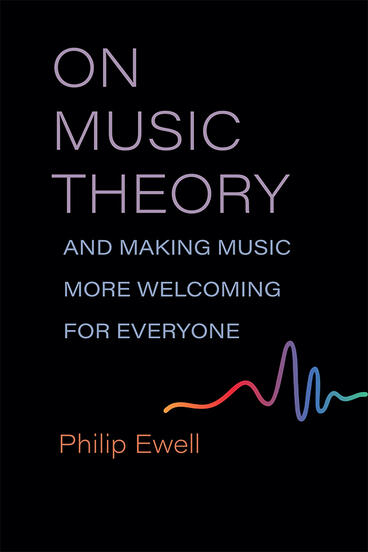
The loudest voice in that conversation belongs to Dr. Philip Ewell, a professor of music theory at Hunter College (CUNY) whose specialty is Russian theory and chromaticism. In November 2019 he gave a plenary talk at the Society for Music Theory titled “Music Theory’s White Racial Frame,” expanded it into a 2020 article, “Music Theory and the White Racial Frame” (Music Theory Online 26.2), and then a 2023 book. His case is easy to state and hard to unhear: the field we teach as universal was built on the assumptions, and sometimes the outright prejudices, of one narrow European tradition. He has laid the whole argument out in public, and it’s worth going to the source — his six-part blog, his full list of publications, and the slides from that first talk.
Questions to sit with
These four questions map to the Identity, Diversity, Justice, and Action domains of the Learning for Justice Social Justice Standards (p. 3). I use them with my own students, but they work for any musician thinking about repertoire and identity.
Identity
What music reflects my own identity?
Diversity
What music reflects other people’s identities?
Justice
Why are so many cultures’ musics under-represented?
Action
What can we do — in a school, a community, a field — to change that?
The “white racial frame”
Ewell borrows the term white racial frame from sociologist Joe Feagin. The idea is that a dominant group’s worldview becomes so ordinary it stops looking like a point of view at all — it simply becomes “the way things are.” Applied to music theory, the frame shows up in what we treat as normal: functional tonality as the measure of sophistication, a handful of German and Austrian composers as the summit of achievement, and everything else as either a stepping stone toward that summit or a curiosity off to the side.
Ewell’s claim is not that individual teachers are bigots. It’s that the structure of the field — its canon, its required courses, its sense of what counts as rigorous — quietly encodes a hierarchy. He puts the historical case bluntly:
[Music theory’s] roots in white supremacy [are] a statement of fact; it’s not under question. Music theory is historically rooted in white supremacy — the music theorists said it themselves in the 19th century, quite openly; it wasn’t a secret. It only became a secret once white supremacy became untenable in the mid-20th century… it had to go underground.
— Philip Ewell, Music Ed Insights
That is a strong claim, and — as we’ll see — not everyone in the field accepts the framing. But Ewell points out that for some of the discipline’s founders, the hierarchy really was explicit. He closed his 2019 plenary this way:
For my entire career, I have been firmly ensconced in our white racial frame, a figurative ‘white music theorist,’ but I am now conflicted. For to feed, sustain, and promote a system based on racialized structures and institutions is simply unacceptable in 2019… I hope that we can show the fortitude to face these inconvenient truths and change music theory for the better in the future.
— Philip Ewell, SMT plenary, 2019
Whose “music theory”?
The musician and YouTuber Adam Neely made this point vivid in his widely shared 2020 video Music Theory and White Supremacy, which features Ewell. Neely runs a simple experiment: he takes real article titles, video titles, and Reddit questions about “music theory” and swaps in the phrase “the harmonic style of 18th-century European musicians.” A question like “What’s the music theory behind Lady Gaga?” suddenly reads as absurd — because we’re applying the values of one specific tradition to music that never operated by them.
That narrowness matters because “music theory” is a global human activity. Javanese karawitan, North Indian raga theory, Turkish makam, Arabic maqam, and countless other systems are every bit as sophisticated as European harmony — each with its own vocabulary, pedagogy, and centuries of thought.
People are loath to admit that any culture with a music — which is every culture — has not only a rich musical tradition, but a rich music-theoretical tradition.
— Philip Ewell
Ewell pushes even further, arguing that even the label “European” is too broad, because it erases the many peoples who have lived in Europe for centuries:
And even when we talk about “European,” well, that’s a mythology too, because it erases all the BIPOC populations that have been in Europe for centuries and even millennia. So Roma, Arabs, Turks, Sami — the Indigenous people who live in northern Europe — they all have their own musics too.
— Philip Ewell, Music Ed Insights
What we actually canonize, he notes, is narrower still — a couple dozen names:
We really are still mired in a mid-20th-century way of looking at music education, which focuses almost exclusively on a handful of composers — not from Europe, not from Western Europe, but really from Germany and Austria, with a few exceptions for France and maybe Italy. So we’re talking about 20 composers. You all know the names: Bach, Beethoven, Chopin, Brahms, and so on. But really only about 20, 25 names. Of course, they were all white men.
— Philip Ewell, Music Ed Insights
“Music theory” describes one tradition. We just stopped saying which one.
The American paradox
There’s a particular irony for musicians in the United States, who often treat European music as intimately their own while treating America’s own traditions as foreign:
I’m always struck by how we in the United States can think of European music as intimately ours but our own American music as foreign. A violinist in East Tennessee can learn all the intricacies of Tchaikovsky’s violin concerto, written over 150 years ago some 5,000 miles away, but never dare play that same violin in an Appalachian fiddling style, which happens right now in their own backyard… The “European” masters were actually just composers, like all others — composers who wrote interesting music, also deserving of attention, but not inherently better, richer, or more complex than other music of our planet.
— Philip Ewell, On Music Theory (2023), p. 226
The “passport” system
On the Music Ed Insights podcast, Ewell offered a memorable analogy for how the frame reproduces itself. Students who master “the traditional canon of music theory” are, in effect, issued a passport — permission to move through the profession. But that passport comes with a debt: to keep it, you have to keep teaching the same system to the next generation, largely unchanged.
It’s not like all of your students are German, right? They’re not all from Austria. So, you know, K–12 folks — they have students who are roughly 40% BIPOC. So it makes perfect sense for K–12 music educators to want to reflect the different musical traditions of the world, because they see it in the faces of their students… But everyone who’s teaching K–12 out in the schools is learning it from people like me. The K–12 educators are being taught, in our colleges and universities, the — as you call it — the passport system.
— Philip Ewell, Music Ed Insights
His hope, especially for K–12 teachers whose classrooms are far more diverse than the canon they inherited, is not to assign blame but to open the frame:
Number one, I very much would want people to just pull away. Yes, whiteness is a thing and we can talk about it — it’s not about blaming the white race. You can’t blame something that’s not real in any tangible sense. Races are, of course, mythological themselves; they’re made up… Whiteness was created roughly in the 1600s here in the United States because it made a lot of sense for people in power — to separate and segregate, and to enrich themselves greatly through land grabs from Indigenous people and through free labor, chattel slavery.
— Philip Ewell, Music Ed Insights
What some of the founders actually said
Part of what gives Ewell’s argument its force is that he doesn’t have to read racism into the tradition — several influential theorists put it in writing. The Belgian theorist François-Joseph Fétis (1784–1871), one of the most important music scholars of the 19th century, argued that the capacity for “true” (tonal) music depended on the physical conformation of the brain — and that non-white peoples lacked the cerebral development to grasp its complexity. He worked these racial claims into his sweeping Histoire générale de la musique (published in the 1860s–70s). Historian Thomas Christensen’s Stories of Tonality in the Age of François-Joseph Fétis (2019) documents this racial theorizing in detail. Ewell rattles off the lineage:
I could go through a long list of people who have quite literally said the reason functional tonality is better is because it was made by white people — that white people are smarter, and that Black people lack the cerebral formations. That’s what François-Joseph Fétis said [in the 19th century], a very famous Belgian, French-speaking music theorist: that they lacked the cerebral formation to understand the complexity of tonality. It was very explicit. And then, of course, we have others like John Powell, Heinrich Schenker, Percy Grainger, or Carl Ruggles.
— Philip Ewell, Music Ed Insights
The more contested example is Heinrich Schenker (1868–1935), whose analytical method remains central to graduate training. In writings such as Der Tonwille (early 1920s), Schenker expressed an aggressive German nationalism — celebrating German “genius” as the source of true musical structure and disparaging other peoples and the democracies that had defeated Germany in the First World War. Ewell argues these views aren’t incidental to Schenkerian theory but woven through it.
A field that stopped moving
Classical music once prized novelty: composers were expected to write new works for their own time. Somewhere in the 20th century the discipline turned backward, treating a fixed canon of past masterpieces as the highest achievement — and freezing the pedagogy along with it. Much of what a first-year theory student drills, including figured bass (a shorthand for improvising harmony from a notated bass line), is a practical skill from the 1600s that few working musicians ever use. Ewell, a cellist, is pointed about it:
As a cellist who’s played a lot of continuo with some really good baroque players — figured bass is something I live and breathe, I love figured bass, I understand it intimately — when we think about [still requiring] it in our music-theory textbooks… Are you kidding me?!
— Philip Ewell, in Adam Neely’s Music Theory and White Supremacy
The staleness was obvious even to canonical figures. Nikolai Rimsky-Korsakov wrote his Practical Manual of Harmony in 1884–85 and deliberately left figured bass out, judging it outdated:
Nikolai Rimsky-Korsakov wrote a harmony textbook — probably the most famous harmony textbook ever written in Russia — and he said, “You know what, music these days is so crazy I’m not even going to put figured bass in here, because it’s kind of a waste of time. It’s outdated; we don’t need it anymore.” That was 1884, Adam!
— Philip Ewell, in Adam Neely’s Music Theory and White Supremacy
Music-education scholar Peter R. Webster (USC Thornton) captures the same inertia with an old joke: a doctor, an engineer, and a music teacher from 1917 travel a century into the future. The doctor and engineer are lost — their fields have transformed beyond recognition:
The music teacher looks about the classrooms and rehearsal spaces… the instruments look the same, and much of the music itself looks and sounds familiar. He observes a rehearsal, talks with a few teachers, and decides to apply for a position right away — knowing that most parts of the job are familiar.
— Peter R. Webster, “Transforming the Landscape of Teacher Education in Music,” USC Thornton
And the frozen curriculum carries frozen assumptions. As Ewell reminds us, the discipline’s recent past is not distant:
When we go back and think about how music was taught 100 years ago, it was completely acceptable to talk about the superiority of white people, the superiority of the male gender — cisgender, obviously — and to simply say out loud that we couldn’t possibly have a woman lead an orchestra.
— Philip Ewell, Music Ed Insights
And this isn’t only Ewell’s complaint. Daniel Chua and Alexander Rehding, in Alien Listening (2021) — a book that asks what our music theory would even mean to an alien decoding Voyager’s Golden Record — land on a blunt verdict about how narrow the field has become:
It is a serious situation when theory is both epistemologically insignificant and ontologically ignorant. What should be the theoretical life of music, unifying its diverse manifestations, has lost its purpose. Structurally boring and fundamentally incomprehensible, music theory has failed music. It is unable to provide a common platform from which to theorize music across the disciplines with basic concepts that are equally meaningful to all music. Music theory fails as theory.
— Daniel K. L. Chua & Alexander Rehding, Alien Listening (2021)
The numbers
Ewell backs the argument with data. In his 2020 article he surveyed seven of the most widely used undergraduate music-theory textbooks and counted the musical examples by composer. The result: roughly 98% of the examples were by white composers. One market-leading text — Aldwell and Schachter’s Harmony and Voice Leading — contained zero examples by composers of color.
| Textbook | Market share | Total examples | By composers of color | % by composers of color |
|---|---|---|---|---|
| Aldwell & Schachter, 4th ed. (2011) | 5% | 465 | 0 | 0% |
| Benward & Saker, 9th ed. (2015) | 13% | 333 | 8 | 2.40% |
| Burstein & Straus, 1st ed. (2016) | 11% | 304 | 1 | 0.33% |
| Clendinning & Marvin, 3rd ed. (2016) | 25% | 504 | 15 | 2.98% |
| Kostka, Payne & Almén, 8th ed. (2018) | 29% | 370 | 10 | 2.70% |
| Laitz, 4th ed. (2015) | 8% | 550 | 2 | 0.36% |
| Roig-Francolí, 2nd ed. (2010) | 5% | 404 | 13 | 3.22% |
| Totals | 96% | 2,930 | 49 | 1.67% |
Source: Philip Ewell, “Music Theory and the White Racial Frame,” Music Theory Online 26.2 (2020), Table 2. Percentages are of musical examples, not pages.
When inclusion becomes tokenism
The obvious fix — “just add more diverse examples” — can quietly reinforce the very hierarchy it’s meant to challenge. As Dave Molk and Michelle Ohnona put it in their 2020 essay Promoting Equity: Developing an Antiracist Music Theory Classroom:
Using examples from other genres within a pedagogic framework that still prioritizes Western art music is not the answer — inclusivity becomes tokenism when we reinforce a stylistic hierarchy. While including “everything” is neither possible nor productive, we must be clear that the decision not to include a particular style is not a dismissal of that style.
— Dave Molk & Michelle Ohnona, NewMusicBox, 2020
The trap is subtle. If we drop a bar of Duke Ellington or a West African drumming pattern into a lesson only to illustrate a European concept — say, a V–I cadence — we haven’t diversified the content; we’ve conscripted other traditions into serving ours. Real inclusion means letting other musics be understood on their own terms, with their own theory, rather than as evidence for conclusions the Western canon already reached.
Molk and Ohnona suggest starting not with a new syllabus but with a set of honest questions, revisited each term:
- What exactly are we teaching — both the material and its underlying messages?
- Why is this particular material on the syllabus, and why teach it this way?
- Whose goals does this actually serve, and what are those goals?
- What disciplinary habits are we reproducing without question?
- What role does whiteness play in our pedagogy? What role does sexism play?
- Who and what is missing — and why?
Why representation matters
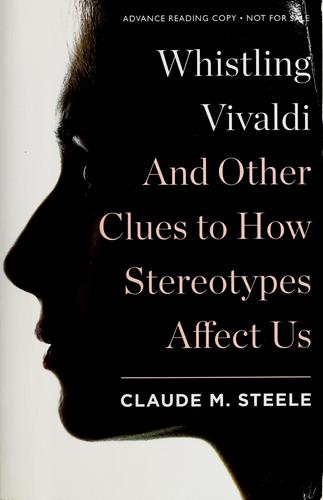
What we choose to teach carries social weight. In Whistling Vivaldi (2010), psychologist Claude Steele tells the story of journalist Brent Staples, a Black man who noticed that people on the street tensed as he passed. When he started whistling Vivaldi, their fear visibly eased. Classical music worked as a kind of social password. Steele’s research gives the phenomenon a name, stereotype threat: when people are afraid of confirming a negative stereotype about their group, the stress alone drags down how they perform.
In a classroom this cuts two ways. What we canonize signals who belongs, and a curriculum that reflects one culture’s achievements quietly tells every other student that their music is a footnote. Widening the canon doesn’t lower the bar. It removes a needless obstacle for the very students we say we want to reach.
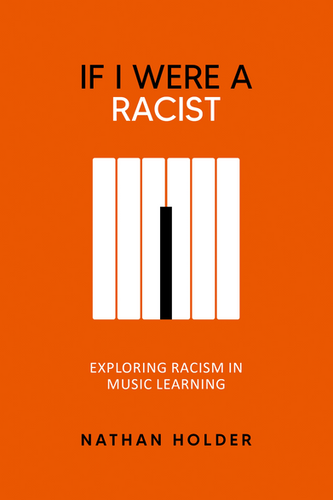
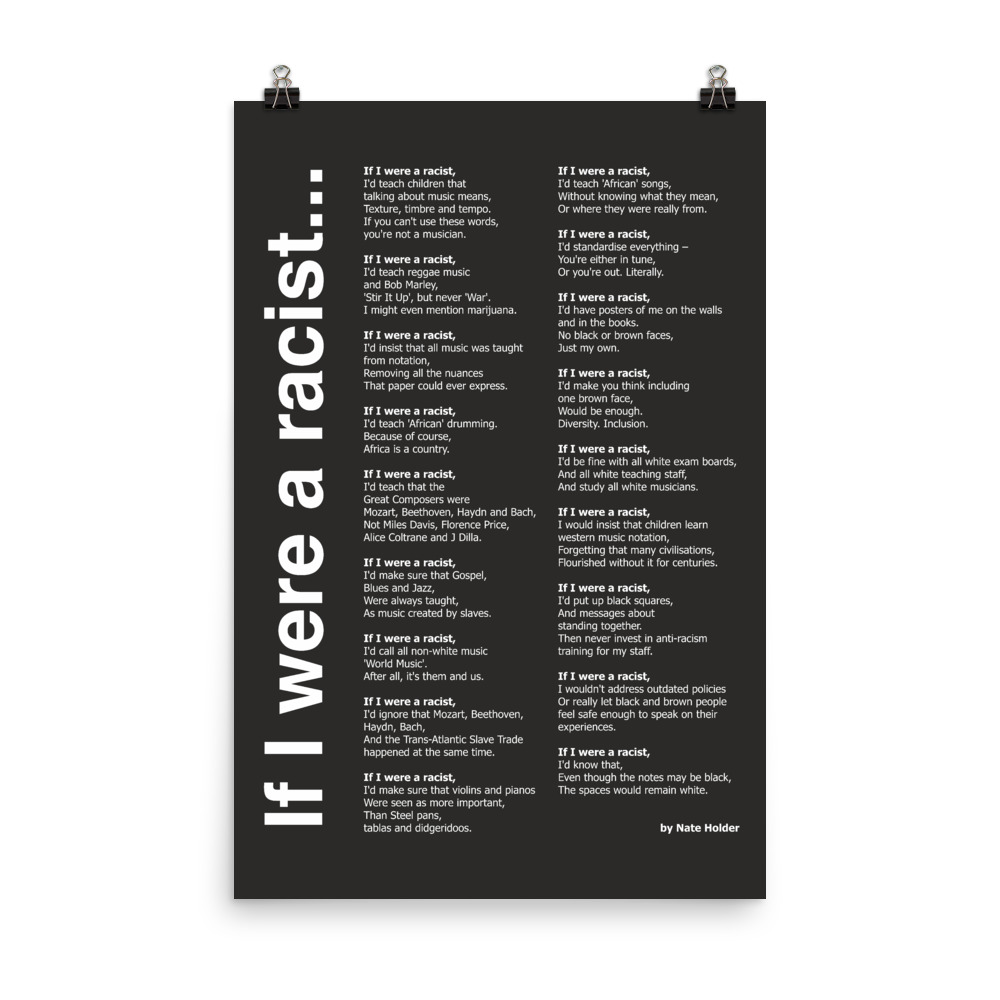
Music educator Nate Holder turns that discomfort into a lesson. His piece If I Were a Racist started as a poem in 2020 and grew into a book and a classroom poster. It walks you through the ordinary assumptions of a music education that centers one tradition, and asks you to notice how normal they feel. Here he is reading it:
A contested, ongoing debate
I don’t want to pretend this is settled. Ewell’s work set off one of the sharpest arguments the field has had in decades, and plenty of serious people — including some who share his goals — push back on the framing, the evidence, or the word “supremacy.” Here is the shape of that argument.
The Schenkerian Studies controversy
In 2020, the Journal of Schenkerian Studies (edited at the University of North Texas by Timothy Jackson) published a symposium of essays responding to Ewell’s plenary. Critics charged that several pieces attacked Ewell personally, that the issue skipped normal peer review, and that it included an anonymous response; the SMT Executive Board repudiated it and UNT investigated. Jackson, in turn, sued the university on academic-freedom and defamation grounds. The case settled in July 2025: UNT paid roughly $725,000 (admitting no fault), Jackson dropped his claims, and he remained the journal’s editor. Coverage split sharply by outlet — some framed it as a free-speech vindication, others as the end of a bruising fight — which is itself a sign of how charged this topic is.
Many theorists read the volume as undercutting its own case. In a widely cited response, Megan Lavengood (professor of music theory, George Mason University) went through the symposium’s objections one by one and showed that Ewell had already anticipated and answered most of them in his talk — the responses, she argued, ended up “proving the point”:
The respondents claiming that we can easily detach racism from theory seem to be willfully deluding themselves and ignoring what Ewell said in the first place.
— Megan Lavengood, “Journal of Schenkerian Studies: Proving the Point” (2020)
Critiques from within the field
Not every disagreement is a culture-war flashpoint. Music theorist Justin London, who shares Ewell’s diversity goals, argued in “A Bevy of Biases” (Music Theory Online, 2022) that the deeper problem is methodological: the field builds sweeping claims on a tiny, unrepresentative corpus of a few composers, and fixing that requires better method, not only a bigger canon. Others contest whether “white supremacy” is the most accurate or useful lens at all. Ewell has engaged these critics directly — a 2025 colloquy in the Journal of Musicological Research collects six responses to his book alongside his own good-humored reply.
What this means for how we teach and practice
None of this means throwing out Bach. The European canon is extraordinary music and worth every hour you give it. The change Ewell and others are after is really one of posture: stop using that tradition as the ruler for everyone else, and make real room for the music students already live in.
- Decenter, don’t discard. Present functional harmony as one powerful system among many — alongside modal jazz, the blues, raga, maqam, gamelan, and more.
- Teach other traditions on their own terms. Let a raga be a raga, not an illustration of a European cadence.
- Value your students’ own musics. The traditions in the room — hip-hop, mariachi, gospel, K-pop, Appalachian fiddle — carry real theory worth naming.
- Keep the useful skills, question the rituals. Ear training, harmony, and analysis stay valuable; ask what we drill out of habit rather than need.
Bringing students’ own music into the room isn’t a passing fad. The music-education scholar John Kratus notes that the gap between school music and the music kids actually love is nearly a century old:
The institutional bias against popular music is not new. Former president of NAfME (née Music Supervisors’ National Conference), Marguerite Hood, wrote in 1931, “Why is there such a distinct gap between the music heard in school and that chosen by the average child for enjoyment?” Nine decades later, her question is still relevant.
— John Kratus, “A Return to Amateurism in Music Education” (2019)
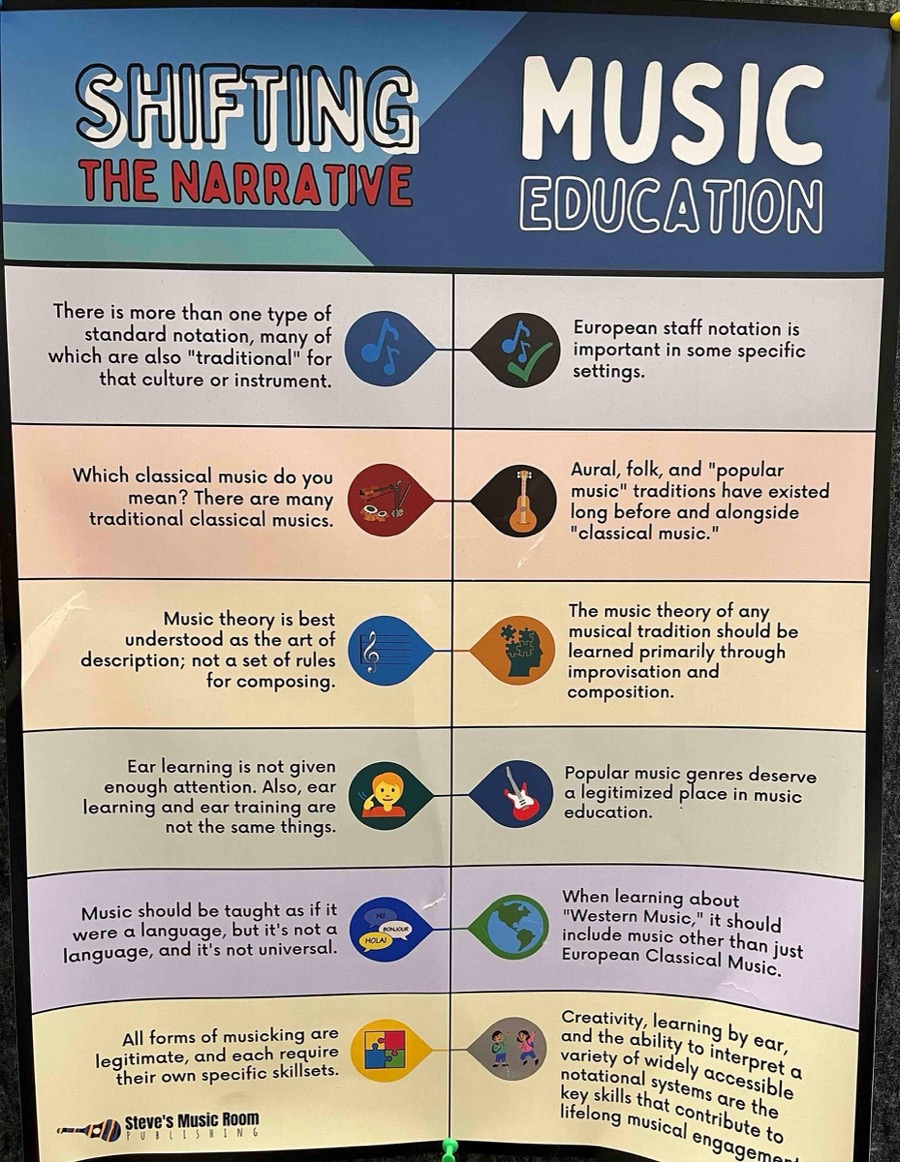
Educator Steve Giddings sums up a lot of this on a single poster. I liked it enough to buy a copy and hang it in my own classroom — here it is on my wall:
Sources & further reading
Some book links below are Amazon affiliate links: if you buy through them, this site may earn a small commission at no extra cost to you. It helps keep every practice tool free.
- Philip Ewell, “Music Theory and the White Racial Frame,” Music Theory Online 26.2 (2020) — the foundational article. Read the article (DOI: 10.30535/mto.26.2.4).
- Philip Ewell, On Music Theory, and Making Music More Welcoming for Everyone (University of Michigan Press, 2023; winner of the 2024 PROSE Award). Publisher page · Amazon.
- Megan Lavengood, “Journal of Schenkerian Studies: Proving the Point” (2020) — an accessible point-by-point response to the JSS symposium. Read.
- Philip Ewell, blog: Music Theory’s White Racial Frame — a six-part series that’s the most accessible way into his thinking. Read the blog.
- Philip Ewell, complete list of talks, articles, and primers. philipewell.com/publications.
- Adam Neely, Music Theory and White Supremacy (YouTube, 2020, featuring Philip Ewell). Watch.
- Dave Molk & Michelle Ohnona, “Promoting Equity: Developing an Antiracist Music Theory Classroom,” NewMusicBox (2020). Read.
- Justin London, “A Bevy of Biases,” Music Theory Online 28.1 (2022) — a methodological critique from a reform-sympathetic theorist. Read.
- Thomas Christensen, Stories of Tonality in the Age of François-Joseph Fétis (University of Chicago Press, 2019). Publisher page.
- Carl Schachter, “Elephants, Crocodiles, and Beethoven: Schenker’s Politics” — a defense on the Schenker question. PDF.
- Claude M. Steele, Whistling Vivaldi: And Other Clues to How Stereotypes Affect Us (Norton, 2010). About the book.
- Nate Holder, If I Were a Racist (poem, book, and poster). FFlat Books.
- Daniel K. L. Chua & Alexander Rehding, Alien Listening: Voyager’s Golden Record and Music from Earth (Zone Books, 2021). Publisher page.
- John Kratus, “A Return to Amateurism in Music Education,” Music Educators Journal 106.1 (2019). DOI.
- Clint Randles, “Microphone check: 5 ways that music education is changing,” The Conversation (2023). Read.
- On the Journal of Schenkerian Studies controversy and its 2025 resolution: Inside Higher Ed (2020) and The Texas Tribune (2025).
Frequently asked questions
Is music theory racist?
Music itself isn’t. But the academic subject called “music theory” is really the harmonic practice of a small group of 18th- and 19th-century Europeans. Scholars like Philip Ewell argue that treating that narrow tradition as the universal standard reflects a “white racial frame” rooted in the explicit views of some founding theorists. How strongly to call this “white supremacy” is actively debated within the field.
What is the “white racial frame”?
A term Ewell borrows from sociologist Joe Feagin: the dominant group’s worldview becomes so normal it stops looking like a viewpoint. In music theory it shows up as treating functional tonality and a few European composers as the definition of musical excellence.
Does this mean we should stop teaching Bach and Beethoven?
No. The argument is to decenter, not discard — to teach the European canon as one rich tradition among many rather than as the measure of all music, and to make real room for the world’s other musics.
Is everyone in music theory agreed on this?
No — it’s a live debate. Some scholars (e.g., Justin London) share the goals but critique the method; others contest the “white supremacy” framing entirely. The 2020–2025 Journal of Schenkerian Studies dispute shows how heated it became.